The neon sign above “Miller’s Quick-Stop” flickered with a rhythmic, dying buzz, casting a jaundiced light over the cracked linoleum floor. Outside, the city was being lashed by a freezing November rain, the kind that soaked through cheap shoes and turned bones to ice.
Leo, a ten-year-old boy with elbows poking through a fraying gray sweater, stood before the counter. He was clutching a single, crumpled five-dollar bill, his small hand trembling as he reached for a loaf of white bread and a tin of generic-brand soup. His eyes were downcast, scanning the floor for any stray coins, his stomach providing a hollow, painful soundtrack to his exhaustion.
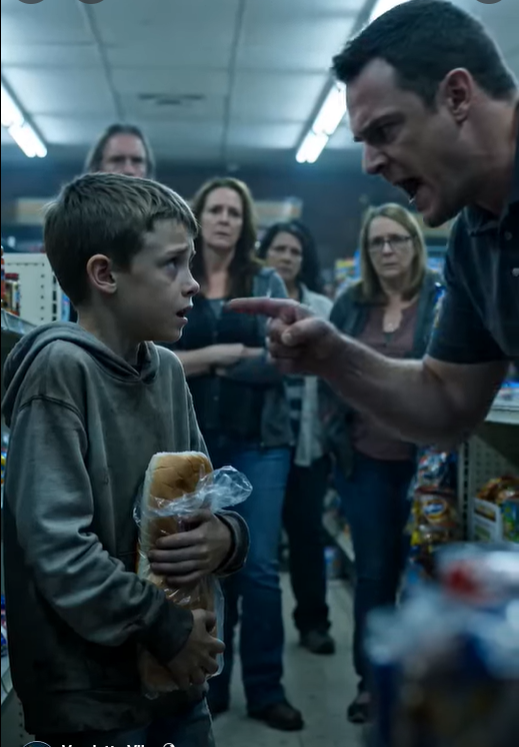
“That’s six-fifty, kid,” the cashier, a man named Henderson, grumbled without looking up from his tabloid. Henderson was a man who measured the world in profit margins and impatient sighs.
Leo smoothed the five-dollar bill against the counter. “I’m sorry, sir. I only have five. Could you… could you leave out the soup? I just need the bread.”
Henderson sighed, a sound of practiced irritation. “I don’t run a charity, kid. Take it or leave it.”
Behind Leo, a line began to form. A woman in a sharp trench coat clicked her tongue, checking her watch. A teenager with earbuds rolled his eyes, sighing loudly. The air in the convenience store grew heavy with the suffocating weight of indifference. Leo felt the heat crawl up his neck, the shame of his hunger vibrating in his chest. He turned to leave, his shoulders slumping, the promise of a meal slipping away into the rain.
Then, the door chime rang—a deep, metallic clang that cut through the silence.
In walked a man who looked like he had been sculpted out of granite and road grime. He wore a heavy leather motorcycle jacket that smelled of oil and wet pavement, his arms covered in faded tattoos that told stories of bar fights and long-haul highways. He took off his helmet, revealing hair cropped close to the scalp and a face lined by years of wind and regret. This was Elias.
Elias walked toward the counter, his heavy boots thumping against the floor. He didn’t look at the impatient woman or the annoyed teenager. He looked at the boy standing in the rain-streaked doorway, his small frame silhouetted against the dark street.
Elias stepped up to the counter, tossed a twenty-dollar bill onto the plastic mat, and gestured with a scarred, calloused thumb toward Leo. “I’ll pay for the boy,” Elias rumbled, his voice like grinding gravel. “And get him a gallon of milk and a carton of eggs. The good ones.”
Henderson blinked, his practiced apathy faltering. “He didn’t ask for—”
“I don’t care what he asked for,” Elias interrupted, his eyes locking onto the cashier’s. It wasn’t a threat, but it was a promise. “He’s hungry. That’s the end of it.”
The store went dead silent. The woman in the trench coat lowered her watch, her expression shifting from annoyance to something softer, more complicated. Leo, paralyzed at the door, felt his breath hitch in his throat.
Elias walked over to him, picking up the bag Henderson had reluctantly filled. He didn’t offer a pat on the head or a patronizing smile. He simply handed the bag to the boy, the weight of it pulling at Leo’s small arm.
“Eat,” Elias said. “And keep your head up, kid. The world’s a cold place, but it isn’t made of ice.”
As Elias turned to walk out into the rain, Leo found his voice. “Wait! Why?”
Elias paused at the door, the neon light catching the silver scars on his knuckles. He looked back, his eyes reflecting a lifetime of battles. “Because twenty years ago, someone did the same for me. I’m just passing the debt along.”
The Aftermath
Ten years later, the scene was entirely different.
The “Miller’s Quick-Stop” had long since been renovated, but it still sat on that same corner. A young man, tall and wearing a clean, professional blazer, walked through the door. This was Leo. He wasn’t the boy with the frayed sweater anymore; he was a junior partner at a law firm dedicated to housing and feeding the underprivileged.
As he walked toward the counter to buy a coffee, he saw a man sitting on the bench outside. He was older, his leather jacket replaced by a worn flannel, his movements a little slower, but unmistakable. Elias.
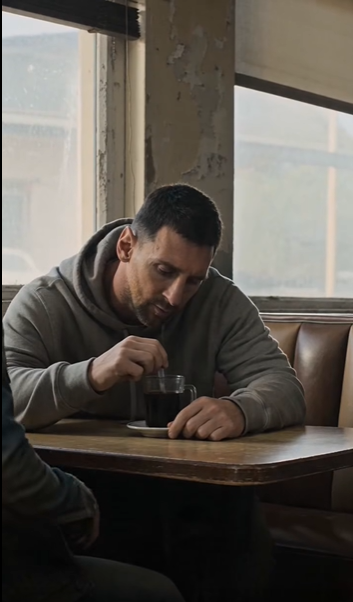
Leo walked outside, the warmth of the day contrasting with the bitter cold of his childhood memory. He approached the man, who was nursing a cup of black coffee.
“Elias?” Leo asked, his voice steady.
The older man looked up, squinting through eyes that had seen too much. He didn’t recognize the boy who had once stood in his rain-soaked shadow.
“You don’t know me,” Leo said, his smile bright and genuine, “but I know you. You saved my life once, with a loaf of bread and a gallon of milk.”
Elias leaned back, a slow, bewildered smile creeping across his face. He remembered the rain, the boy, and the anger of a cashier who couldn’t see past his own register.
“You look like you’re doing alright for yourself, kid,” Elias said, his voice softer than it had been a decade ago.
“I am,” Leo replied. “Because you taught me that humanity isn’t just about survival—it’s about making sure the next person doesn’t have to suffer alone.”
Leo pulled a card from his pocket and placed it on the bench. “I run a foundation now. We’ve got a space for a logistics manager—someone who knows how the road works, someone who understands people. It’s warm inside, and there’s always a hot meal.”
Elias looked at the card, then back at the young man who had once been a shivering child in a doorway. The weight of the road, the scars of the past, and the long, solitary miles seemed to lift, if only for a second.
“I’m not much for offices,” Elias chuckled, though his eyes were glistening.
“It’s not an office,” Leo said, placing a hand on the man’s shoulder. “It’s a home.”
That evening, as the sun dipped below the horizon, painting the city in shades of gold and hope, two men walked toward a future they never could have imagined. One had been a child saved by a stranger’s bread; the other had been a drifter saved by a boy’s gratitude. Together, they walked away from the street corner, leaving the past behind, proving that the cycle of kindness, once started, never truly has to end.