The St. Jude Cathedral was transformed into a sanctuary of blinding white elegance. Thousands of imported roses clung to the pews, and the air was thick with the scent of expensive lilies and the underlying tension of a high-society merger. Seraphina, the bride, stood in the center of the nave, her gown an architectural marvel of silk and crystal. She was a woman who lived by the motto that everything could be bought, and if it couldn’t, it could be discarded.
Her groom, Julian, was the son of a shipping tycoon. He was a man who had spent his life attempting to be the person his father wanted, but tonight, he was finally ready to be the person he chose to be.
The trouble began in the vestibule just before the processional. Julian’s mother, Martha, had arrived late. She had been working a double shift at the local hospital—she was a nurse, a woman whose hands were calloused from years of service and whose face held the gentle lines of a lifetime of sacrifice. She hadn’t had time to change out of her drab gray uniform, and she hadn’t wanted to miss her son’s wedding for the world.
As Martha hurried toward a back pew, attempting to stay invisible, the hem of her uniform snagged on a stray rose thorn, causing her to stumble. Her shoulder grazed Seraphina, who was adjusting her veil in a gilded mirror.
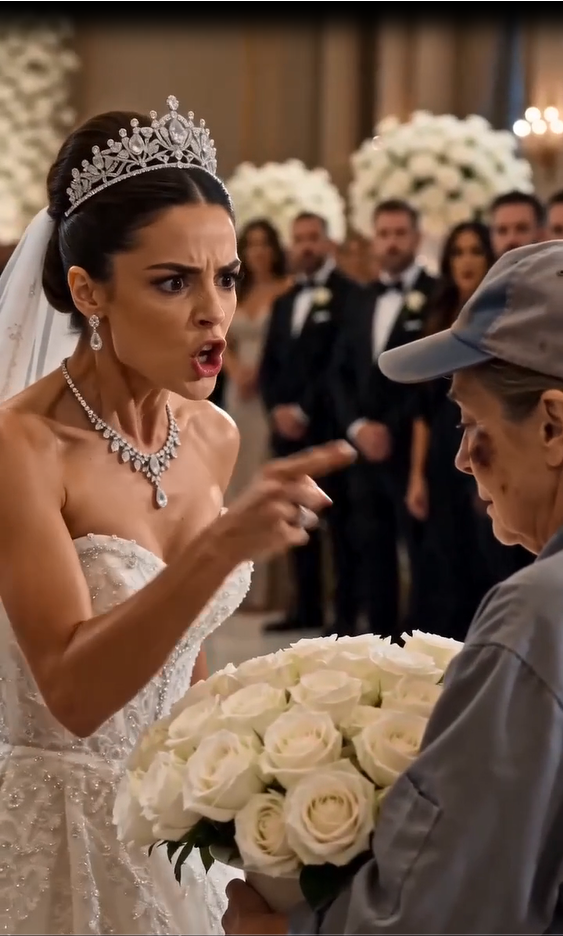
The reaction was instantaneous. Seraphina didn’t see Julian’s mother; she saw an intruder. She didn’t see a human being; she saw a smudge on her perfection. With a flick of her wrist, she delivered a blow that sounded like a gunshot in the quiet cathedral.
“You idiot!” Seraphina shrieked, her voice echoing against the vaulted ceiling. “Look at what you’ve done! You almost ruined my dress! Who let this cleaning lady in here? Security! Get this trash out of my sight before I have her arrested!”
Martha gasped, her hand flying to her cheek, where a crimson welt was already beginning to bloom. The guests gasped, but they didn’t rush to help. They watched, paralyzed by the spectacle of the bride’s vitriol.
Julian, who had been waiting at the altar, heard the commotion. He didn’t wait for his best man. He didn’t wait for the organist to start the music. He sprinted down the aisle, his heart hammering against his ribs. When he saw his mother—the woman who had raised him alone, the woman who had sold her own furniture to pay for his medical school—cowering on the floor, the world around him went cold.
He reached his mother before Seraphina could deliver another insult. He knelt, wrapping his arms around her frail frame, his eyes blazing with a fire that Seraphina had never seen.
“Julian, darling,” Seraphina said, her voice instantly dropping into a sickeningly sweet tone. “Don’t worry. I’ve handled it. This peasant almost ruined the ceremony.”
Julian stood up, still holding his mother’s hand. He didn’t look at Seraphina with love. He looked at her with the absolute, terrifying clarity of a man who had finally awakened from a nightmare.
“She isn’t a peasant, Seraphina,” Julian said, his voice vibrating with suppressed rage. “She is my mother. And that ‘dress’ you care so much about? It’s just fabric. My mother’s dignity? That’s something you couldn’t afford if you had a thousand lifetimes.”
“Julian, what are you doing?” Seraphina demanded, her face turning a sickly shade of white. “The guests are waiting! The press is here!”
“The wedding is over,” Julian stated. He turned to the stunned crowd. “To everyone here: thank you for coming. Please leave. The bride has revealed who she is, and I have realized who I am. We are done.”
Five years later.
The city had largely forgotten the scandal of the century, but for those who had been in the cathedral that day, the lesson lingered. Seraphina had spent the months following the wedding in a whirlwind of social damage control, but the image of her slapping an elderly nurse had become a permanent stain on her reputation. She had eventually moved abroad, trading the cold glares of her peers for the anonymity of a distant country, where she lived a life that was quiet, expensive, and profoundly lonely.
Julian, however, had found a different path.
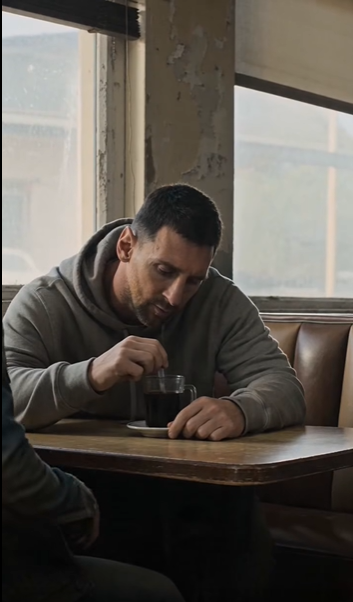
He was standing in the courtyard of a community health clinic in the heart of the city—a facility he had helped fund and build. The clinic provided free medical care to the elderly and those who had been marginalized by the very society he used to belong to.
He was wearing a casual jacket, his sleeves rolled up, helping carry a crate of medical supplies into the back of a truck. The door to the clinic opened, and Martha stepped out, wearing a simple sundress and looking radiant. She was no longer a nurse, but the director of the facility, a role she managed with a sharp mind and a tender heart.
“You’re working too hard, Julian,” Martha said, a warm smile dancing on her lips.
“I’m working just the right amount, Mom,” Julian replied, wiping sweat from his brow.
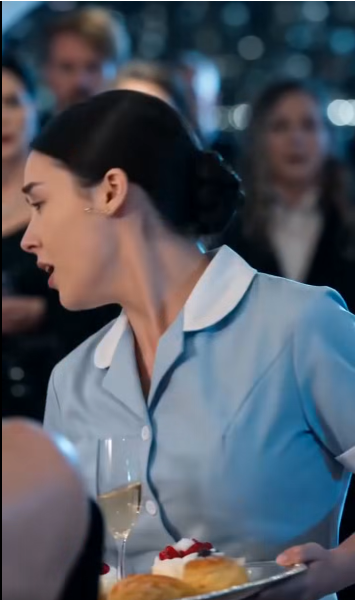
He looked toward the entrance, where a young woman named Elena was waiting. Elena was a social worker at the clinic, a woman who possessed a quiet strength that Julian had fallen in love with over the past two years. She didn’t care about his family’s money or his past; she cared about the man he had become when he finally stopped trying to impress the world.
“Are you ready for dinner?” Elena asked, walking over to join them.
“In a second,” Julian said. He looked at his mother, then at the bustling clinic, then at Elena.
He thought back to that day in the cathedral. He remembered the feeling of the cold marble floor against his knees and the sound of his mother’s weeping. He realized that the day he had walked away from the altar was not the day he lost his future, but the day he had been granted the freedom to create one.
“I have everything I ever wanted right here,” Julian said.
Martha took his hand and then took Elena’s. “You have a good heart, Julian. That is the only inheritance that never runs out.”
As the three of them walked toward the small restaurant down the street, the sun dipped below the skyline, casting a golden light across the city. Julian wasn’t a shipping tycoon; he wasn’t a name in the society columns. He was a man who had learned that true wealth was measured in the people you stood up for, and the love you allowed yourself to receive.
He looked at his mother, who was laughing at something Elena had said, and felt a profound sense of peace. He had lost a wedding, he had lost his social standing, and he had lost the approval of a world that didn’t know how to love. In exchange, he had found a life that was honest, a partner who was his equal, and a mother who was his north star.
The cathedral was just a building, and the silk dress was just cloth, but the bond he had saved that day had become the foundation of everything that truly mattered. As he entered the restaurant, Julian pulled out a chair for his mother and then for Elena, feeling, for the first time in his life, that he was exactly where he was meant to be. The wedding was over, but the life he had chosen had only just begun.