The smog in Oakhaven did not just cling to your clothes; it stained your lungs, a permanent reminder that in this city, you were breathing at the sufferance of the elite.
Victor stood at the mouth of the alley, his shoulders hunched against the biting wind. He was a man composed of calloused hands and a quiet, stubborn hope that most had long ago traded for apathy. He worked as a mechanic in the industrial district, a job that afforded him enough to eat and the privilege of being invisible. But invisibility had its merits. It allowed him to see the things the high-rises ignored.
He saw Isabella.
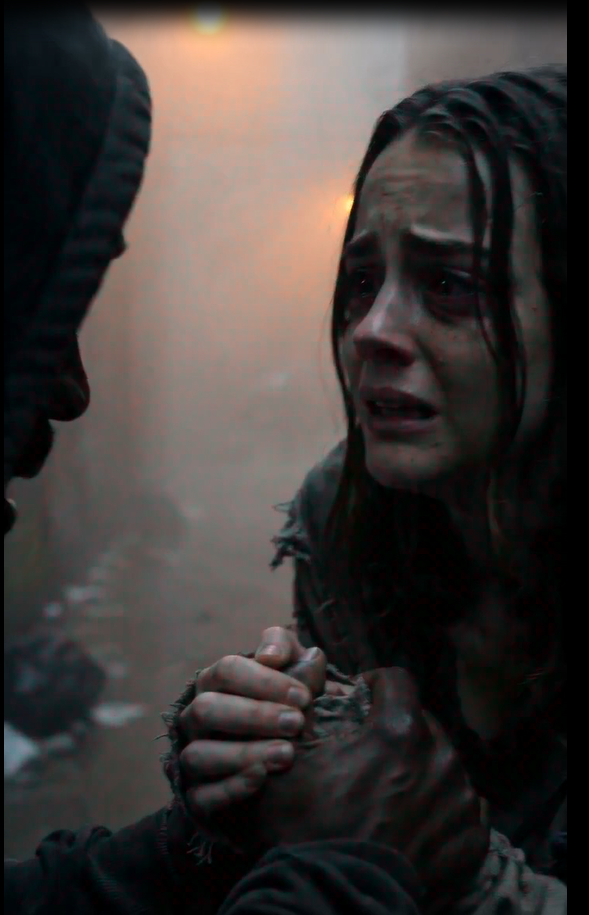
She was crumpled against a wall layered in decades of graffiti, her head bowed, a tapestry of bruises painting her face. She belonged to the Hart family, a name that tasted like copper in the mouths of commoners—the architects of Oakhaven’s misery, the owners of the city’s heart and soul. To them, Isabella was not a daughter; she was a ledger entry, a leverage point in a merger, a chess piece to be moved at the whim of Richard Hart.
Victor didn’t think about the consequences. He didn’t calculate the weight of the chains he was about to inherit. He saw a human soul drowning in the shallow end of a gilded cage, and he reached out.
“Come with me,” he whispered, his voice steady despite the tremor in his hands.
Isabella looked up. Her eyes were hollow, reflecting the dim orange flicker of a nearby streetlamp. “They’ll find us,” she breathed, her voice raspy from exhaustion. “You don’t know them. They own the ground we walk on.”
“Then we’ll walk on the sky,” Victor said, offering her his hand.
She took it. In that moment, the connection was electric—a small, defiant spark in a landscape of suffocating darkness.
They moved through the labyrinthine backstreets, avoiding the main thoroughfares where the surveillance cameras hung like watchful vultures. But the Harts were not merely wealthy; they were omnipresent. They had eyes in the street sweepers and ears in the shopkeepers.
They reached the edge of the industrial sector, the border where the grime turned into sterile glass and manicured stone. A black SUV, sleek and predatory, slid into the alley like a shark entering a shallow pool. It didn’t roar; it purred with the silent confidence of absolute authority.
The door opened, and Richard Hart stepped out. He was a man who looked as though he had never stepped in a puddle in his life. His suit was a marvel of tailoring, a stark, antiseptic white that seemed to suck the color out of the alleyway. He didn’t look at Victor; he looked through him, as if Victor were a ghost, an inconvenience to be cleared away.
“Isabella,” Richard said, his voice smooth, devoid of anger, which made it far more terrifying. “You’ve forgotten your place. It is a messy, ungrateful thing to wander off.”
“I am not your property,” Isabella said, though she flinched as she spoke.
Richard chuckled, a cold, dry sound. He snapped his fingers, and two men in dark suits emerged from the shadows. “Everything in this city is property, Isabella. You simply haven’t learned how to read the deed.”
He turned his gaze toward Victor then. It was a look of profound, chilling pity. “And you. You think you’re a hero? You’re just a broken cog trying to jam the machine. You’ll be replaced by morning.”
The guards lunged. Victor fought with the raw, desperate strength of a man who had never had anything to lose, but he was no match for the clinical, trained efficiency of the Harts’ security. He was slammed against the graffiti-stained wall, the impact knocking the wind from him. He watched, helpless, as they dragged Isabella toward the vehicle. She screamed, but in Oakhaven, screams were merely background noise.
The SUV doors slammed shut—a sound like a tomb closing.
As the car pulled away, Victor sank to the wet pavement. His vision swam with the pain in his ribs, but his mind was burning. They had taken her, but they hadn’t taken his resolve. He realized then that Richard Hart was wrong. The powerful didn’t own the world; they only owned the illusion of control. And illusions shattered when confronted with the truth.
He didn’t return to the mechanic shop. Instead, he reached out to the others—the people in the shadows who had been whispered to by the wind, the people who were tired of being “property.”
Weeks turned into months of quiet coordination. They didn’t use money or weapons; they used the one thing the elite feared: the truth. They spent their nights broadcasting the ledgers, the contracts, the hidden horrors of the Hart dynasty across every screen, every wall, and every digital frequency the city possessed. They showed the city its own chains, and in doing so, they showed them how to break them.
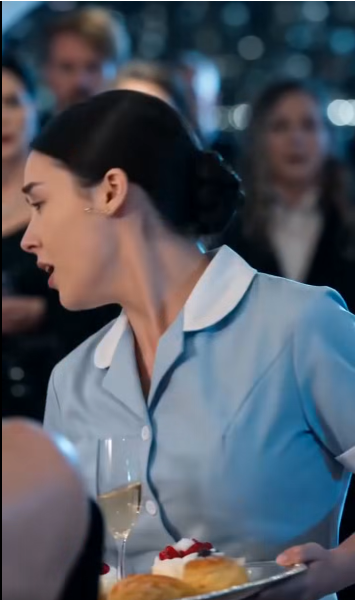
The climax arrived on a Tuesday, during the annual Gala of the Gilded. As the city’s elite toasted to their own prosperity, the doors of the ballroom didn’t burst open—they were simply surrounded. Thousands of citizens stood in a wall of silence outside, an ocean of people who simply refused to move, refused to serve, and refused to obey.
Victor stood at the front. By his side stood Isabella, who had escaped her confinement the moment the security infrastructure of her own home had been compromised by the collective action of the staff who had finally decided to choose dignity over a paycheck.
Richard Hart stood on his balcony, looking down at the silent throng. For the first time in his life, his suit looked like nothing more than fabric. He held no cards. He had no leverage. The law of the land had been written by his bloodline, but the law of the people had been rewritten by their spirit.
There was no violence. There was no fire. There was only the sound of a city waking up. The elite fell not because they were defeated by force, but because they lost the consent of the governed.
Victor and Isabella watched as the police—many of whom had quietly joined the protest—escorted the Harts away to face the mountain of evidence that had been brought to light.
As the sun began to rise over the smog-cleared horizon, the golden light hit the alleyway, washing away the shadows. Victor looked at Isabella, and for the first time, he saw her smile—a genuine, tired, beautiful expression of a life truly beginning.
They hadn’t just survived; they had changed the weather. They walked away from the wreckage of the old world, hand in hand, into a future that was, for the first time, entirely their own.