The funeral hall of the Oakhaven Memorial was a masterpiece of manufactured gloom. White lilies, their scent so cloying it bordered on nauseating, lined the aisles. At the front of the room, a heavy, polished mahogany coffin sat atop a dais, draped in a tasteful funeral shroud.
Maria stood nearby, a picture of refined grief. She wore a black veil that obscured the lack of tears in her eyes, and her hand—adorned with a three-carat diamond ring that caught the candlelight—rested delicately on the lid of the casket. To the dozens of mourners, she was the grieving widow, a woman whose heart had been shattered by the sudden, “tragic” passing of her husband, Arthur.
To Maria, however, the casket was not a monument to her husband. It was a vault.
“It is a tragedy,” she whispered to a weeping guest, her voice perfectly modulated. “The doctors were so firm about the closed-casket service. The… the trauma to his face was simply too much to bear. I want the world to remember him as he was, not as he was in his final moments.”
She knew that beneath the lid, Arthur was not dead. He was merely paralyzed, the victim of a slow-acting neurotoxin she had slipped into his evening tea. He was conscious, trapped in a nightmare of his own body’s making, his heart beating a slow, steady rhythm that only she could imagine.
The double doors at the back of the chapel slammed open, the sound echoing like a gunshot.
Elias, Arthur’s son from his first marriage, strode into the room. He was disheveled, his coat damp from the rain, his eyes wild with a frantic, intuitive energy. He had spent the last forty-eight hours chasing ghosts, uncovering financial discrepancies in his father’s estate, and finding a ledger that spoke of Maria’s dark ambitions.
“Stop!” Elias roared, his voice cutting through the soft organ music.
Maria stiffened. Her heart did a frantic dance, but she turned with practiced elegance. “Elias? This is highly inappropriate—”
“You don’t get to bury him!” Elias stormed toward the dais. “I know about the offshore accounts, Maria. I know you were losing the house, and I know you were desperate. You didn’t just lose him—you took him.”
“You are hysterical,” Maria hissed, stepping between him and the coffin, her poise beginning to fracture. “The body is decomposing, Elias! It is a public health hazard to open that lid! Do not dishonor your father’s memory with this disgusting display!”
Elias didn’t listen. He looked at the coffin, and he heard it—or perhaps he felt it. A soft, muffled thud from within, like a heartbeat echoed in wood.
“Get away from the lid,” Elias warned, his hand moving to the heavy brass latch.
Maria’s facade shattered. She lunged, her nails digging into Elias’s arms, her screams becoming high-pitched and animalistic. “No! You can’t! He’s mine! Everything is mine!”
Elias shoved her aside, her expensive shoes skidding on the polished floor. With a roar of exertion, he threw back the heavy mahogany lid.
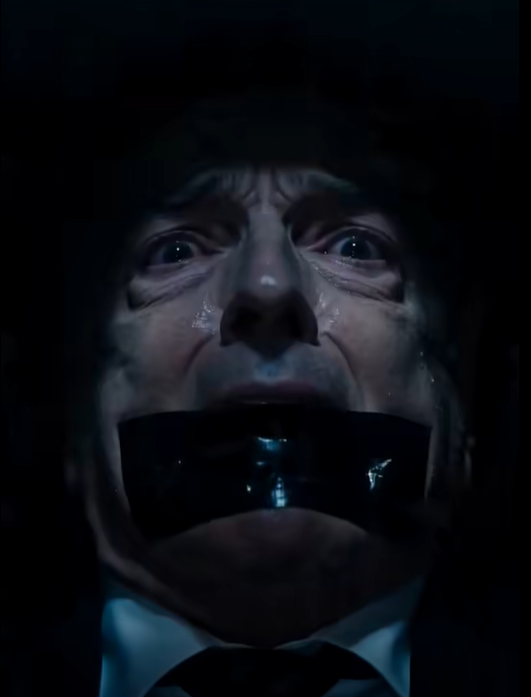
The sight inside stopped the breath of every person in the hall. Arthur lay there, his face pale as parchment, his skin glistening with sweat. A strip of silver duct tape was pressed firmly over his mouth, and his eyes—wide, darting, and filled with a terror that transcended language—were fixed on his son.
The chapel erupted into chaos. Maria tried to run, but she was tackled by two of the ushers near the door, her frantic shrieks turning into a chilling, incoherent babble.
Elias tore the tape from his father’s mouth, his hands shaking as he checked for a pulse. Arthur let out a ragged, wheezing gasp, the first breath of life he had taken in hours.
The Aftermath: Justice in the Light
The trial was the spectacle of the decade. The evidence, unearthed by Elias during his frantic investigation, painted a clear picture of Maria’s cold-blooded plot to seize the Oakhaven estate and liquidate its assets. The neurotoxin she had used was traced directly to a purchase she had made under a pseudonym. She was sentenced to life without the possibility of parole, her world of pearls and prestige replaced by the stark, gray reality of a prison cell.
But the real story happened in the months that followed.
Arthur’s recovery was slow. The toxin had taken a toll on his nervous system, leaving him with a tremor in his hands and a haunting memory of the darkness. However, he was not the same man who had walked into that trap. The experience had peeled away the layers of his own professional coldness. He had spent his life building a business empire and ignoring the people who mattered most, but lying in that coffin, staring into the dark, he had realized that his greatest achievement was not the company, but the son who had refused to give up on him.
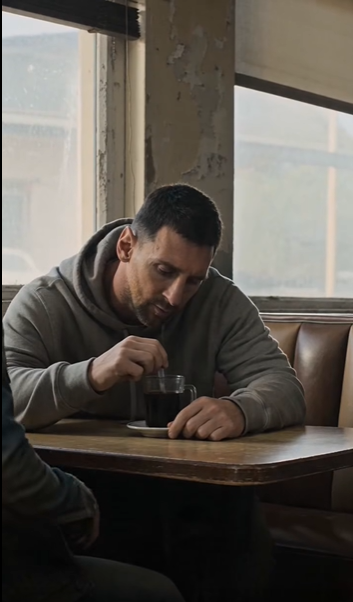
Six months later, Arthur and Elias sat on the porch of a lakeside house—a place Arthur had bought for his retirement, a place far removed from the city and the high-society lies that had nearly cost him his life.
Arthur watched the water, his hand resting on the railing. “I spent so much time building walls, Elias,” he said, his voice softer than it had ever been. “I thought I was building a life, but I was just building a tomb. I’m sorry I wasn’t there for you.”
Elias looked at his father. The scars of the past were still there, but they were no longer jagged. “We’re both here now, Dad. That’s what matters.”
Arthur smiled—a genuine, tired, but happy smile. He had lost his wife, his fortune was tied up in years of litigation, and he would never be the same man he was before the funeral. But as he looked at his son, he knew that he had gained something far more precious. He had been buried alive, but in the process, he had finally found his way back to the living.
The funeral had been built on lies, but the life they were building now was anchored in the most powerful truth of all: forgiveness, a second chance, and the enduring bond between a father and the son who had been his light in the darkest of places.