The Woman Who Mocked a King Learned That Pride Always Falls Hard
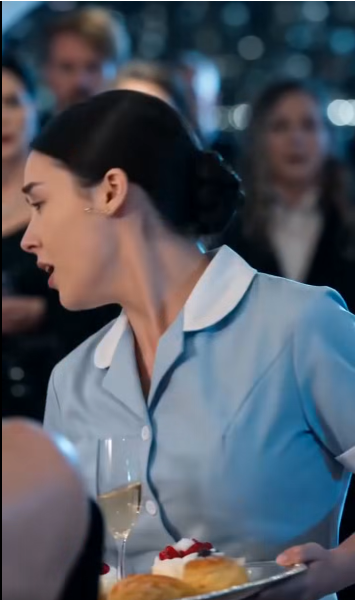
Giulia’s glass slipped from her fingers, clattering against the polished marble floor. It didn’t shatter, but the red wine inside sloshed out, staining the white hem of her gown like a fresh wound. The crowd had pulled back, forming an invisible perimeter around her and Marco. They were looking at her not with the admiration she craved, but with a predatory curiosity. She was the spectacle now.
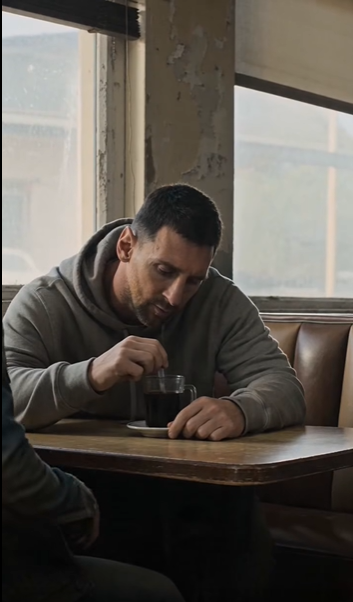
Marco remained motionless. He didn’t look angry, which was somehow more terrifying than if he had started shouting. He simply adjusted the cuffs of his plain, charcoal-colored jacket, his movements methodical and calm. He had been standing here for an hour, listening to her recount the story of their ‘failed’ relationship, letting her construct a narrative where she was the victim and he was the anchor she had wisely discarded.
“Mr. Thorne,” the tycoon said again, keeping his head bowed in a show of genuine respect. “The board is ready for the final signing. Your presence is the only thing missing.”
Giulia’s breath hitched. She looked at the tycoon—a man who had graced the cover of every major business magazine for the last decade—and then back at Marco. He wasn’t the broke, struggling artist she had left in a one-bedroom apartment three years ago. He was the majority stakeholder in the very venture capital firm that had financed the conglomerate her own father worked for.
“I’m ready, Julian,” Marco said to the tycoon, his voice steady. He didn’t glance at Giulia. He didn’t sneer. He acted as if she were a piece of furniture that had been moved, irrelevant to the architecture of the room.
“Wait,” Giulia stammered, her voice thin and ragged. She reached out, her fingers trembling as they hovered near his arm. “Marco, I… I didn’t know. You never told me. Why would you let me look like this?”
Marco finally turned his gaze toward her. His eyes were clear and devoid of any lingering affection. It wasn’t hatred that stared back at her; it was indifference, which was the final insult.
“You didn’t want to know who I was, Giulia,” he said, keeping his tone quiet enough that only she could hear. “You only wanted to be sure that I wasn’t anyone of consequence. You built your entire identity on the idea that I was a failure so that you could feel like a success.”
He stepped away from her reach, his shadow falling across the wine-stained fabric of her dress. “You judged my value by the size of my wallet, not the depth of my character. You got exactly what you were looking for. You just didn’t realize that your definition of value is obsolete.”
Giulia felt the weight of every eye in the room. Her father, a man who had staked his reputation on his association with the ballroom’s elite, had moved toward the periphery, his face an unreadable mask of burgeoning panic. He knew, as she did now, that the contracts he had been pinning his firm’s survival on were sitting in the briefcase Marco carried.
Marco turned his back on her, following Julian toward the private library where the real business of the evening would conclude. The guests parted like water before a ship. The music restarted, but the celebratory tone had vanished, replaced by a subdued, nervous energy. Giulia was left standing by herself, the red stain on her dress growing darker and more conspicuous with every passing second.
She had spent years honing her wit to be sharp, to cut people down, and to ensure she remained the most envied person in the room. She had thought that by humiliating Marco, she was simply reinforcing the natural order of things. Instead, she had just destroyed the only bridge she had left to the life she wanted.
She tried to move, to follow them, to offer some kind of pathetic apology, but her legs felt heavy. She was an outsider in her own element. A waiter passed by, and she instinctively reached for a new glass of champagne, her hand shaking so hard that the liquid spilled over the sides. She realized then that she was not the queen of the room. She was merely a guest, and a guest who had overstayed her welcome was rarely invited back.
An hour later, the library doors opened. Marco emerged, accompanied by her father. Her father’s face was pale, his shoulders hunched in a way she had never seen before. He walked straight up to her, not to console her, but to deliver the news.
“We have to go,” he said, his voice clipped. “There’s been a restructuring. Marco’s firm has acquired our debt.”
Giulia didn’t need to ask for details. She could see it in the way he wouldn’t look at her. The social standing she had fought so hard to protect, the influence she had wielded like a weapon, had all been liquidated in the time it took for her to laugh at a man in a plain jacket.
She walked out into the cool night air, the sounds of the ballroom fading behind her. The stars were bright and uncaring, vast points of light that didn’t care about ballroom politics or social hierarchies. She looked down at her ruined gown, the silk now permanently marked, and realized that the shame wasn’t in the wine, or in the loss of status. The shame was in the reflection she had finally been forced to confront.
She had judged a man by his lack of riches and found herself bankrupt in every way that actually mattered. Marco was already in his car, pulling away from the curb, his silhouette barely visible against the dark glass. He was going to a life built on his own terms, while she was going home to a house filled with things that had no meaning.
She stood on the sidewalk for a long time, watching the city lights. There were no more insults to throw, no more people to belittle, and no more stage for her to perform on. She had finally learned the truth that Marco had been trying to teach her for years: when you treat people as obstacles to your success, you eventually find yourself alone in a room of your own making. And in that room, the only person you have left to despise is yourself. She turned, stepped away from the curb, and began the long, quiet walk toward a future where she would have to learn, from the very beginning, how to be a person worth knowing.