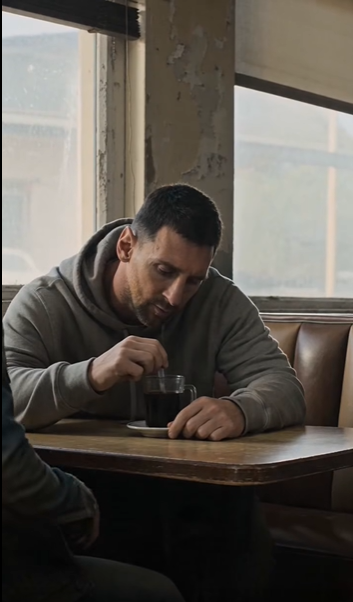
The sterile, white corridors of St. Jude’s Metropolitan Hospital hummed with the sound of high-tech machinery and the frantic footsteps of the elite. Dr. Marcus Thorne, a world-renowned cardiothoracic surgeon, stood outside the ICU, his face a mask of controlled terror. His daughter, Lily, lay inside, her heart failing, the monitors emitting a rhythmic, jagged warning that signaled her time was running out.
The medical team was in a tailspin. A power surge, caused by a freak electrical storm, had fried the hospital’s main grid. The back-up generators were sputtering, and the advanced surgical robotics—the very tools Thorne relied upon for his precision—were dead.
“We’re losing her!” a nurse screamed over the wail of the emergency alarm.
Outside, in the mud-slicked alleyway adjacent to the hospital’s auxiliary power intake, a boy named Elian huddled under a plastic tarp. Elian was a “ghost”—a child of the streets, covered in the grime of the city, his hands calloused from scavenging copper wiring and broken electronics to sell for scraps. He knew this hospital better than the doctors did; he knew its skeletal frame, its hidden conduits, and its fragile, dying electrical heart.
When the lights flickered and died across the ward, Elian felt the hum of the dying system vibrate through his very bones. He knew exactly what had gone wrong.
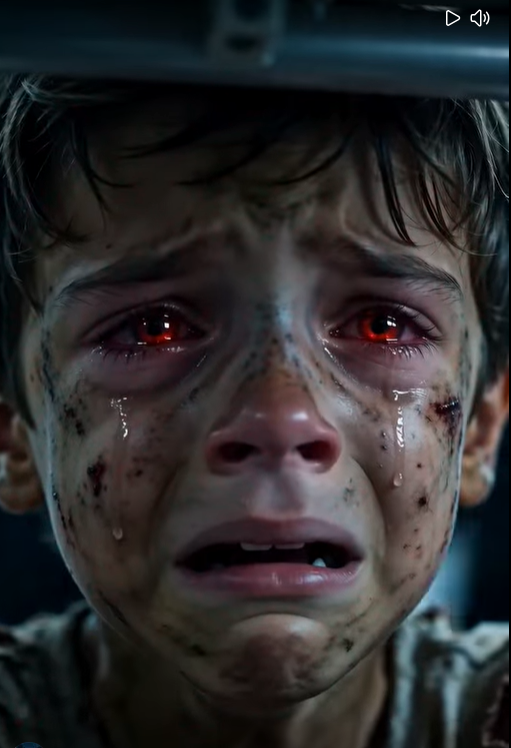
He didn’t hesitate. He scrambled through a service vent, his small, nimble frame sliding through the dark, cramped shafts. He emerged into the heart of the ICU, a boy covered in coal dust and oil, standing in the middle of a room filled with surgeons in pristine scrubs.
Dr. Thorne, seeing only a ragged intruder, lunged forward with blind, panicked fury. “Get out!” he roared, grabbing Elian by the collar of his tattered shirt. “You’re contaminating this room! Do you have any idea what you’re doing? Get away from my daughter!”
Elian didn’t fight back. He looked past the doctor’s rage, his eyes locked on the monitor above Lily’s bed. The line was flattening. The heart was giving up.
“She’s not dying because her heart is broken,” Elian whispered, his voice steady despite the adrenaline. “She’s dying because the override is shorted. If you don’t bypass the main relay, the surge will kill her in thirty seconds.”
Thorne hesitated, his knuckles white as he gripped the boy’s shirt. The sheer absurdity of the situation—a beggar explaining cardiac bypass technology—should have been dismissed. But in the boy’s eyes, Thorne saw a terrifying, raw intelligence. It was the look of someone who had learned survival through pain, someone who had seen the world break in ways the doctor could never imagine.
“Let go,” Elian said, his voice dropping to a command. “Or she dies.”
Thorne released him. The room went silent, save for the frantic, fading beep… beep… of the monitor.
Elian moved like a shadow. He didn’t use surgical tools; he used a makeshift copper bridge he had fashioned from a piece of scavenged wire in his pocket. He reached behind the console, his fingers dancing over the exposed wiring with the precision of a pianist. He was trembling, not from fear, but from the weight of his own history—a memory of his own mother, lost to a similar tragedy years ago because he hadn’t been fast enough, or smart enough, to fix what was broken.
He bridged the gap. A shower of sparks flew, illuminating his face—streaked with dirt, tears, and the haunting intensity of a child who had lived a lifetime of trauma in a few short years.
The lights surged. The machines groaned back to life. The flatline on the screen climbed, hesitated, and then pulsed into a steady, rhythmic, beautiful heartbeat.
The room remained in a suffocating silence. The doctors stood frozen, stunned by the impossible. Thorne fell to his knees, his hands trembling as he reached for his daughter’s hand. She was breathing. The color was returning to her cheeks.
Elian stood in the corner, his chest heaving. The dirt on his skin looked like a shroud, but in that moment, he looked like a king.
Thorne turned, his face pale and contorted with shame. He looked at his own hands, then at the boy’s grimy, bleeding fingers. He realized then that the “threat” he had tried to throw out was the only soul in the room capable of seeing the truth.
“Who… who are you?” Thorne stammered, his prejudice collapsing like a house of cards.
Elian didn’t answer. He simply wiped a smudge of oil from his cheek, leaving a clean streak of pale skin behind. “Fix your systems, Doctor,” he said softly. “They’re not as strong as you think.”
He turned to leave, but Thorne stepped into his path. The doctor wasn’t looking at the boy’s clothes anymore; he was looking at his soul. “Wait,” Thorne said, his voice thick with emotion. “You saved her. You saved my daughter. How can I repay you?”
Elian looked at the hospital, then out the window at the rain-washed city. “I don’t want payment,” he said. “I just want you to remember that sometimes, the ones who know how to save the world are the ones you’ve spent your whole life trying to ignore.”
The ending was not a sudden explosion of wealth or fame, but a slow, quiet mending of two fractured lives. Thorne did not let the boy walk back into the cold. He became Elian’s guardian, not as a master, but as a student. He provided the education and the care that Elian had been denied, and in return, Elian taught the doctor that medicine was more than just technology—it was empathy.
Years later, a young man in a white lab coat—sharp, confident, and brilliant—stood over a new patient. He wasn’t the boy from the alley, but he carried that boy’s memory in the way he treated the forgotten and the broken. He knew that beneath every layer of dirt, every scar of trauma, and every prejudice the world held, there was a human being worth fighting for.
The hospital was still full of high-tech machines, but the heart of the place had changed. The prejudice that had once blinded the staff had been replaced by a singular, guiding principle: look deeper.
The miracle hadn’t been the technology. The miracle had been the boy who realized that even when the system fails, human connection—the simple, radical act of reaching out—can bring a life back from the brink. And though the scars of his childhood remained, Elian had finally found a place where he was seen, where he was valued, and where he could finally, truly, belong.